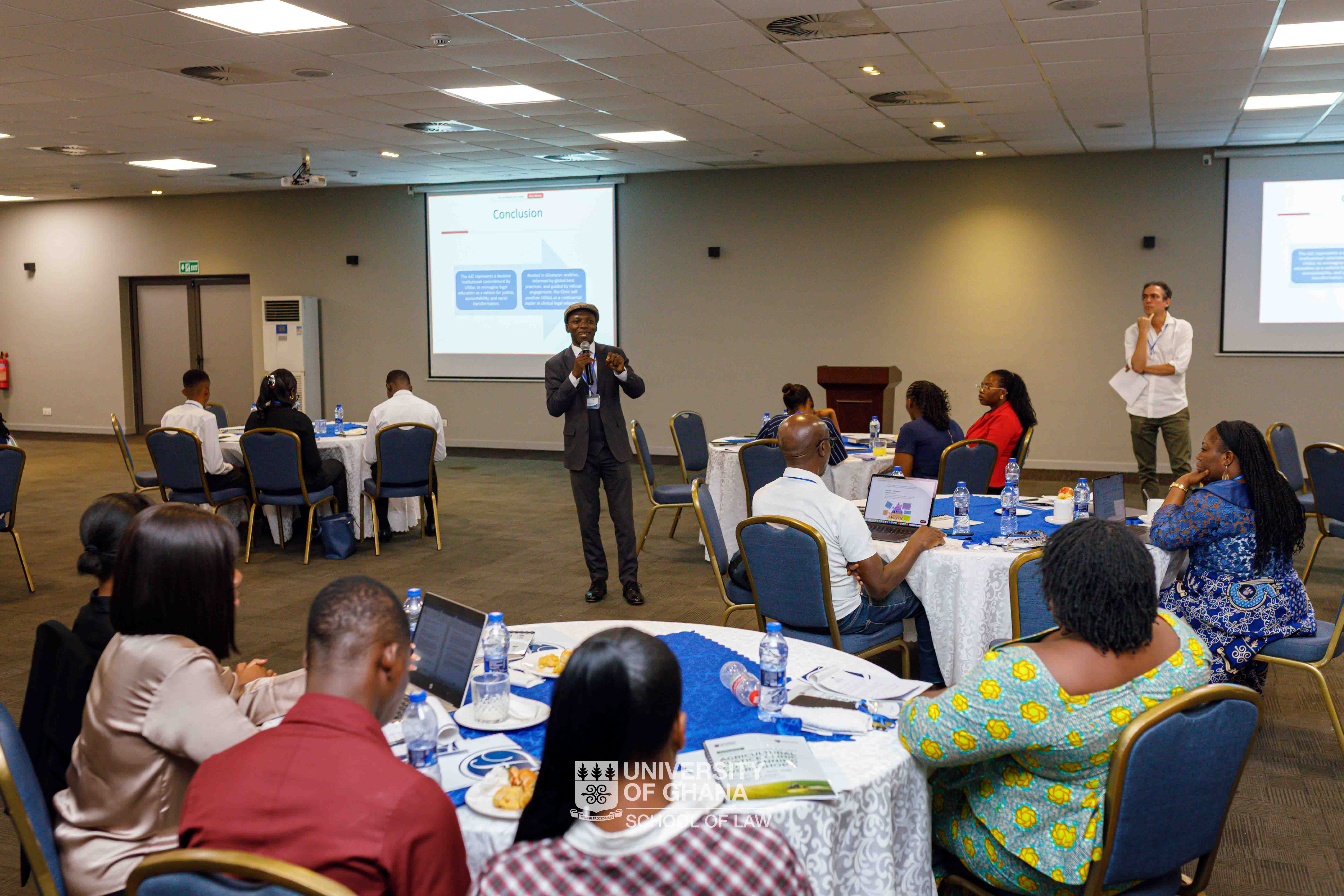
The University of Ghana School of Law (UGSoL), in partnership with Harvard Law School (HLS), convened its 5th Agricultural Justice Clinic Co-Planning Workshop at the Fiesta Royale Hotel, Accra on 9th January 2026. This day-long session brought together legal educators, practitioners, policymakers, and international partners to advance clinical legal education and agricultural justice in Ghana.
The workshop was opened by Hon. Mahama Ayariga, Majority Leader and Member of Parliament for Bawku Central. An esteemed alumnus of both UGSoL and Harvard Law School, Hon. Ayariga reflected on his foundational role as a pioneer who helped launch UGSoL’s clinical legal education programme in 1997. Together with Prof. Raymond Atuguba, they established a clinic in Nima, funded initially by a grant from the U.S. Embassy, which focused on addressing human rights issues in underserved communities during Ghana's democratic transition from military rule.
Hon. Ayariga connected this history to contemporary challenges, highlighting Ghana's paradox of importing four billion dollars’ worth of food annually despite abundant agricultural potential. His recent work on negotiating equitable land arrangements between traditional authorities and commercial agriculture operations demonstrates the critical intersection of law, agriculture, and social justice that the new clinic aims to address.
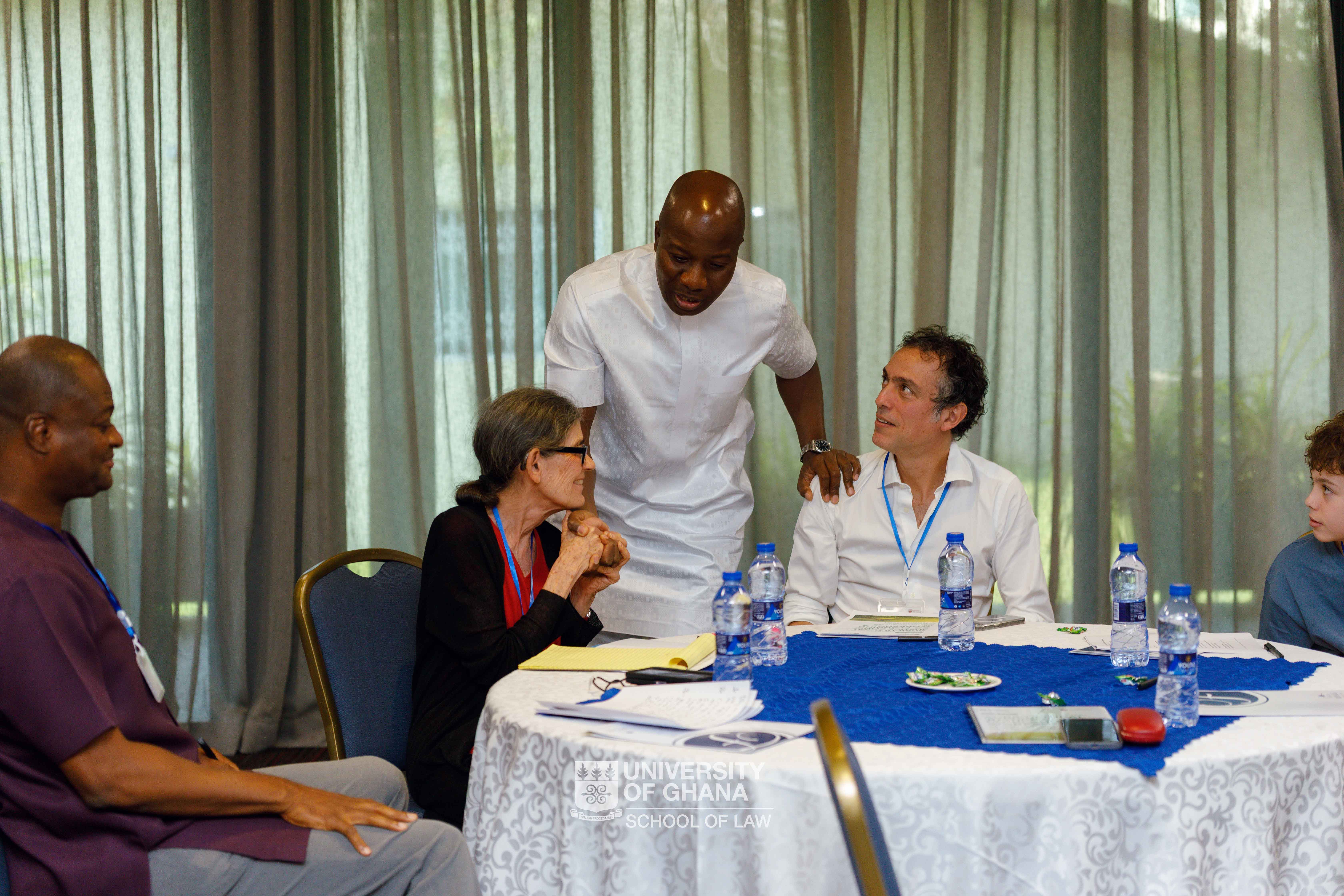
Prof Lucie White of Harvard Law School, who has been instrumental in developing the Ghana-Harvard partnership since 1999, emphasised the reciprocal nature of learning between the institutions over nearly three decades. She expressed the hope to continue learning from and listening to participants, and to work alongside them in advancing agricultural justice in Ghana, the United States, and globally.
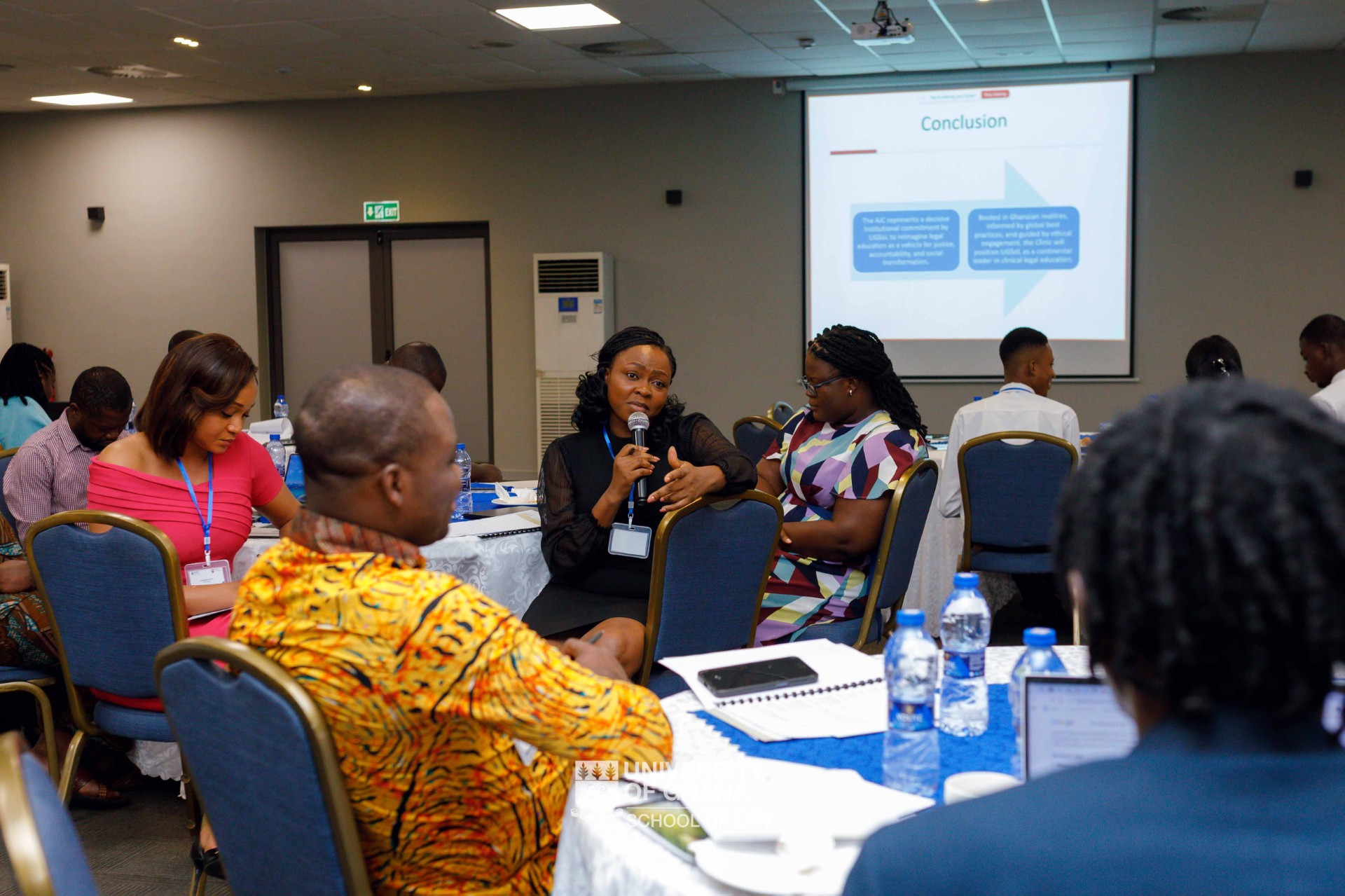
Dr. Fafa Delight Agbeko presented the comprehensive blueprint for the Agricultural Justice Clinic, synthesising insights from multiple workshops held across 2024 and 2025. The blueprint represents collaborative work involving students, faculty, international partners, and community stakeholders.
After extensive deliberation, three priority areas emerged based on their critical importance to agricultural justice and the feasibility of making a meaningful impact: land tenure and access, addressing disputes and insecurity faced by small-scale farmers; illegal mining (galamsey), which undermines agricultural land and soil quality; and labour rights, focusing on fair wages and the protection of vulnerable groups in the agricultural sector.
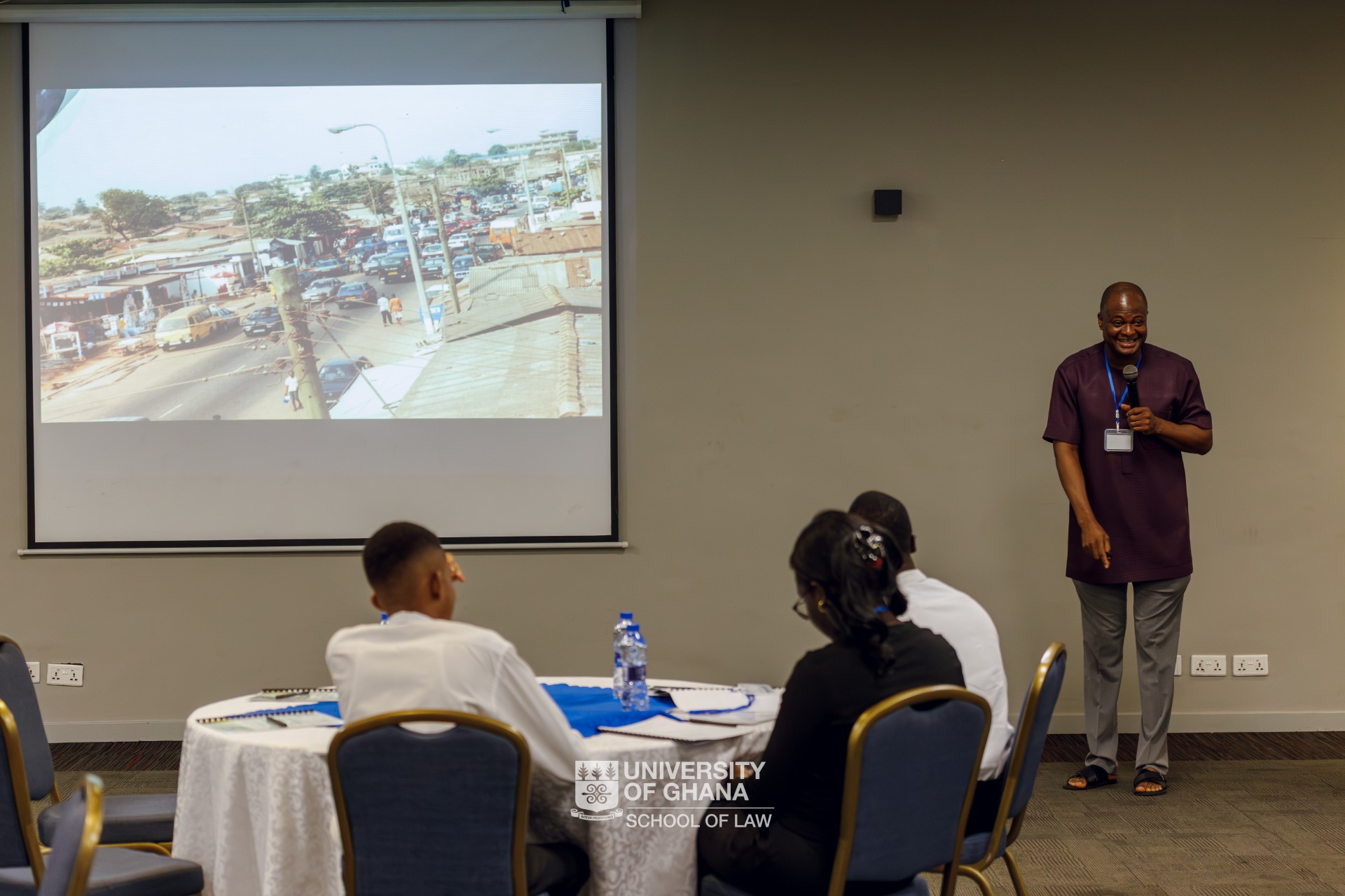
Prof. Raymond Atuguba, Acting Director of Legal Education at the Ghana School of Law, took participants through a photographic journey spanning from 2000 to the present, illustrating the evolution of clinical legal education at UGSoL. The presentation revealed that the first clinical workshop occurred at the Ghana Institute of Management and Public Administration (GIMPA) in 2000, although subsequent narratives often began with 2001.
The photographs document visits by Harvard students and faculty over the years, community groups meeting under clinic facilitation, and the expansion from Nima to Bolgatanga and Walewale in Northern Ghana. Prior to the COVID-19 pandemic, the clinical teams were already on the ground in Northern Ghana focusing on education rights. As the Ministry of Education pivoted to remote learning, the research uncovered a critical disconnect between policy and the practical realities of students. This discovery paved the way for direct engagement with the Ministry to advocate for more inclusive solutions.
Prof. Atuguba also announced the naming of the clinic's Management Information System as "White Lex," the Lucie White Clinical Legal Education System, honouring Prof. White's three decades of partnership and mentorship. He noted that Clause 42 of the new Legal Education Reform Act requires every law dean to maintain a database of clinical programmes, making such systems essential for legal compliance.
Mr. Mark Finn from the Food and Agriculture Organization (FAO) Regional Office for Africa emphasised FAO's potential as technical rather than primarily financial, highlighting opportunities for knowledge sharing on legal tools related to agriculture. He noted the concept of agricultural literacy for legal professionals’ parallel FAO's work on legal literacy for financial experts, suggesting that an understanding of the agricultural sector as part of student skills development will be important.
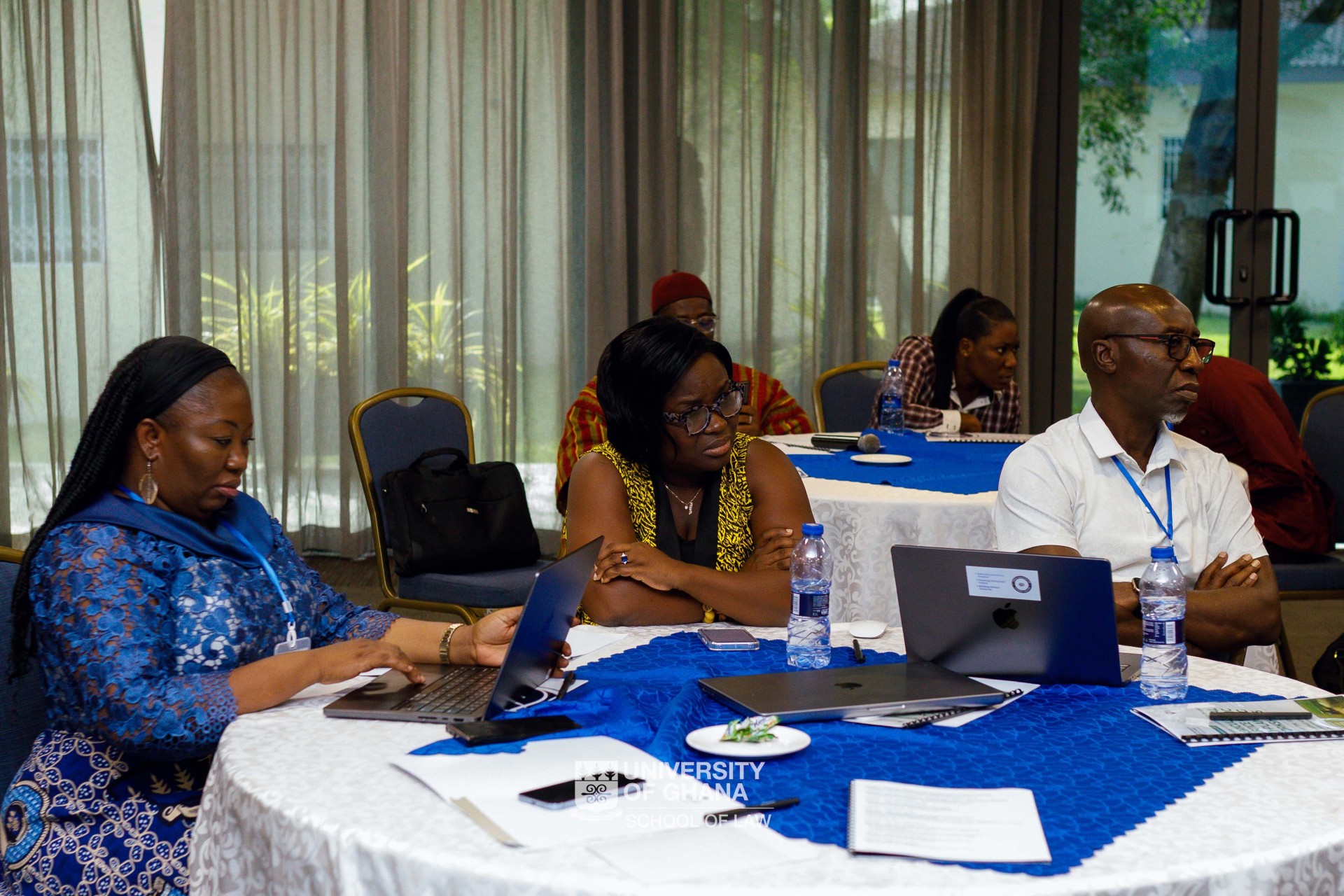
Commending the blueprint’s innovative approach, Mrs. Mammie N. Hutchful Nortey, a Senior Research Development Officer at the University of Ghana Research and Innovation Directorate, urged its formal submission to university leadership to serve as a framework for other schools. She particularly highlighted the complexities of researching sensitive topics like illegal mining; to protect students from powerful external interests, she proposed developing a specialised safety protocol for fieldwork in these areas.
During the session, Dr. Emelia Ghansah from the Ghana Agricultural Workers Union offered vital perspectives on student engagement and strategic partnerships. In addition to discussing selection logistics and the benefits of deep-dive internships, she highlighted a critical gap: the absence of the Ministry of Employment and Labour Relations from the proposed partners list. This correction was immediately embraced, as the faculty acknowledges that labor rights are at the very heart of agricultural justice.
Prof. Jeremy Perelman from Sciences Po Paris Law School shared France's parallel struggles with ongoing debates about the separation between theoretical and practical education, noting that the focus has been on the relevance and quality of bar schools where students do internships, which has gotten a very bad reputation due to poor accreditation. Dr. Obiri Korang, a senior lecturer at UGSoL suggested that properly structured clinical education could fulfill pupillage functions if designed correctly.
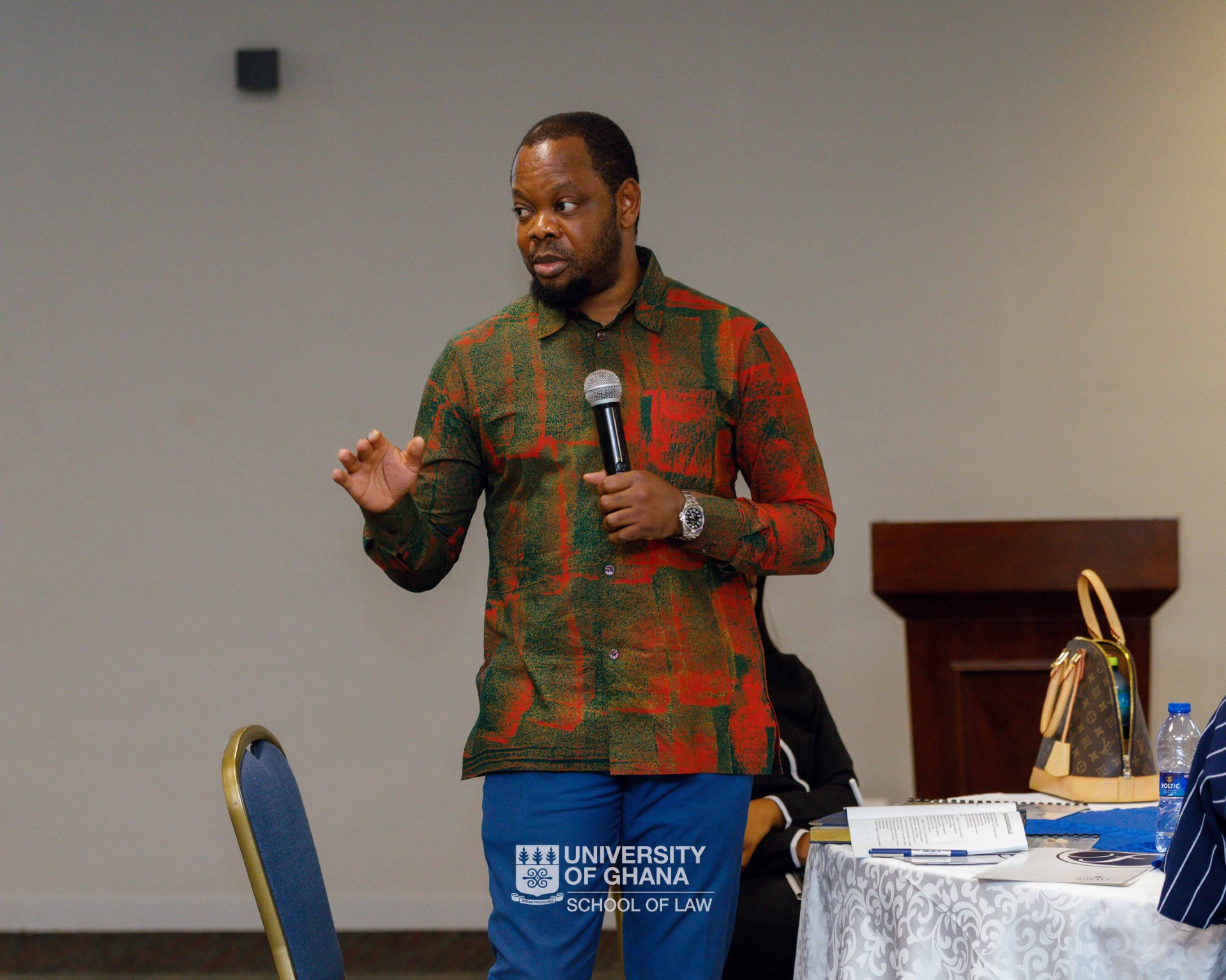
Dr. Justice Srem-Sai, Deputy Attorney-General and Minister for Justice, joined the workshop to address questions about the Legal Education Reform Bill 2025. He outlined the bill's dual objectives as separating the regulation of legal education from the General Legal Council (GLC) and transferring it to universities and enhancing quality to produce globally competitive lawyers.
Dr. Clara Casser-Tee and Dr. Obiri Korang led a presentation of the clinic’s blueprint to the Conference of Law Deans (COLD) for consideration and potential adoption into their respective clinics, in line with the proposed compulsory requirement under the Legal Education Reform Bill 2025.
The Agricultural Justice Clinic aspires to advance equitable, sustainable and community-driven agricultural systems in Ghana through transformative legal education, strategic advocacy and long-term institutional engagement. In addition, the clinic is committed to addressing systemic injustice in Ghana's agricultural sector by combining immersive experiential learning with community-centered lawyering, interdisciplinary collaboration and sustained policy engagement.