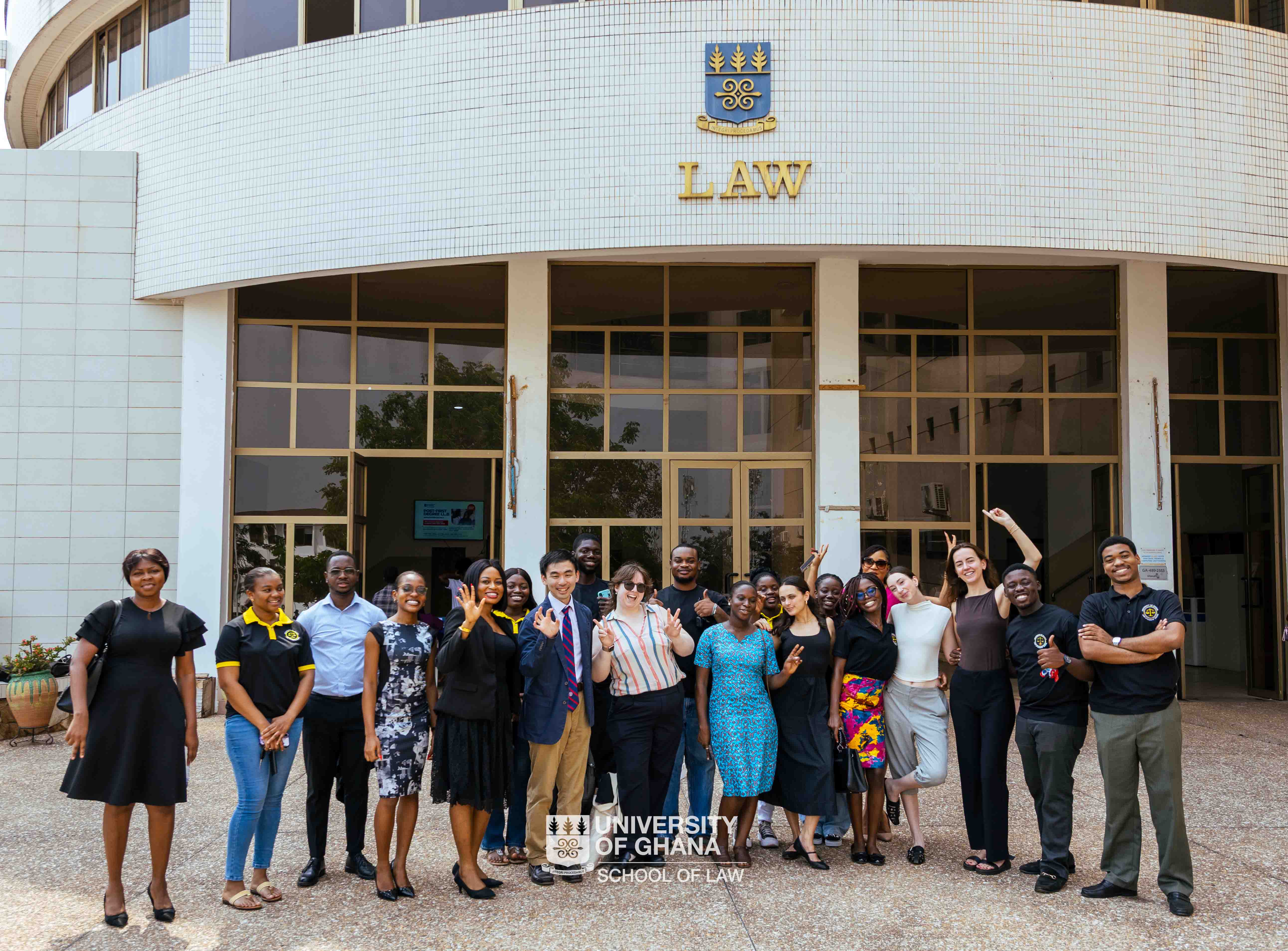
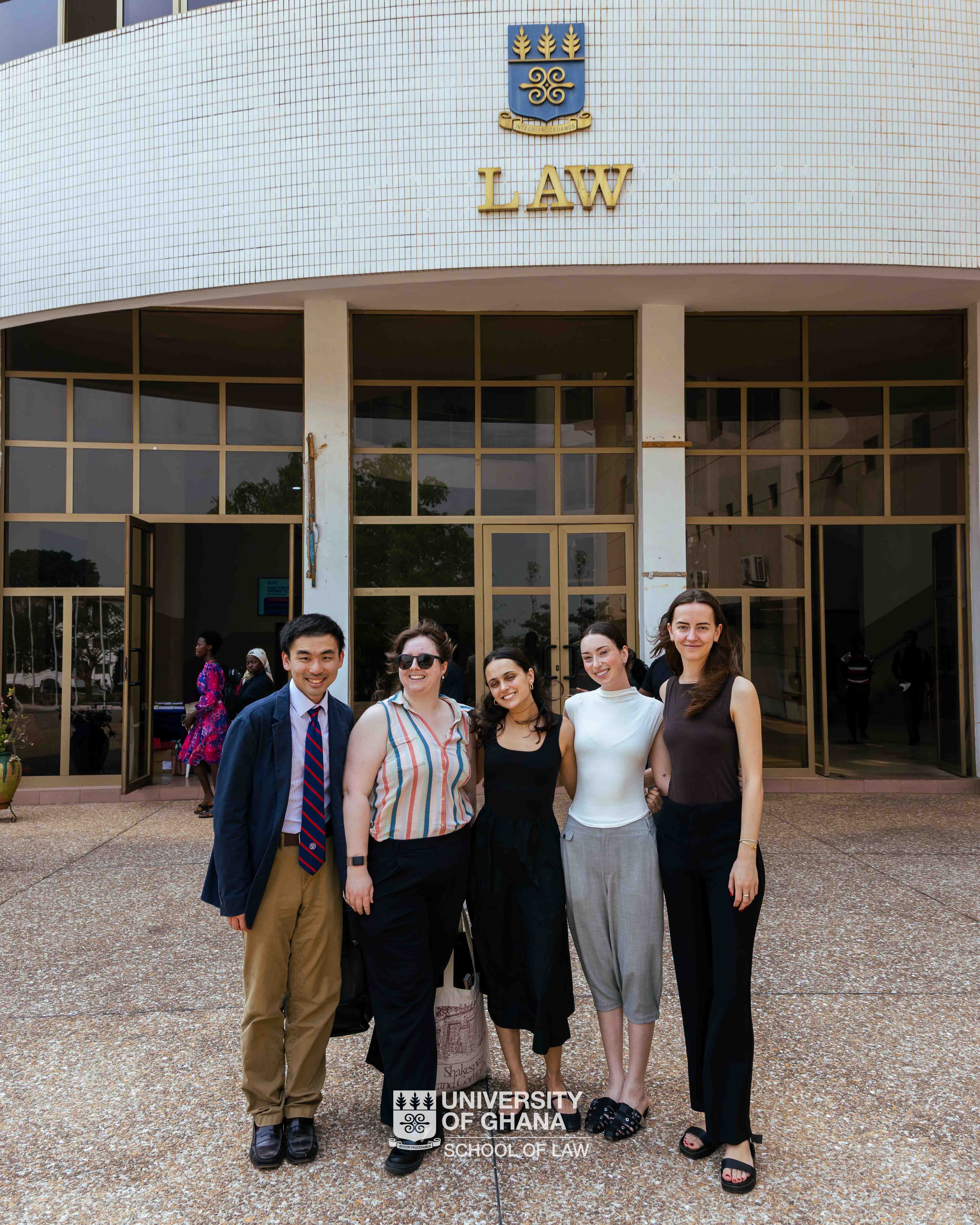
A five-member delegation from the University of Pennsylvania (UPenn) in collaboration with selected students and faculty of the University of Ghana School of Law (UGSoL) paid a courtesy call on the Dean of the University of Ghana School of Law, Prof. Peter Atudiwe Atupare on Monday 9th March 2026 to provide updates on their clinical research project which focuses on examining the application of artificial intelligence systems within Ghana’s judicial system.

The delegation from UPenn comprised Alexander Clevewood, Isabelle Geddes, Katherine (Kari) Siengenthaler, Loren Grandelli, and Abigail Oliver. The group are currently in Ghana to advance their work on a unique AI tool called Deliberation.io. The team from UGSoL working with UPenn on this project are Ms. Dorothy Phoebe Ayitey, Dr. Fafa Delight Agbeko, Georgina Gyan-Kontoh, Abigail Nakuor Wowolo, Adelaide Victoria Acheampong and final year student Laud Nii Mantey Annang. Ms. Ayitey doubles as the coordinator for this project. Other staff members of UGSoL present at the meeting included the School Administrator, Ms. Susie Naa Odarchoe Lamptey and Ms. Nadia Kokui Torsu of the Communications and International Partnerships Unit.
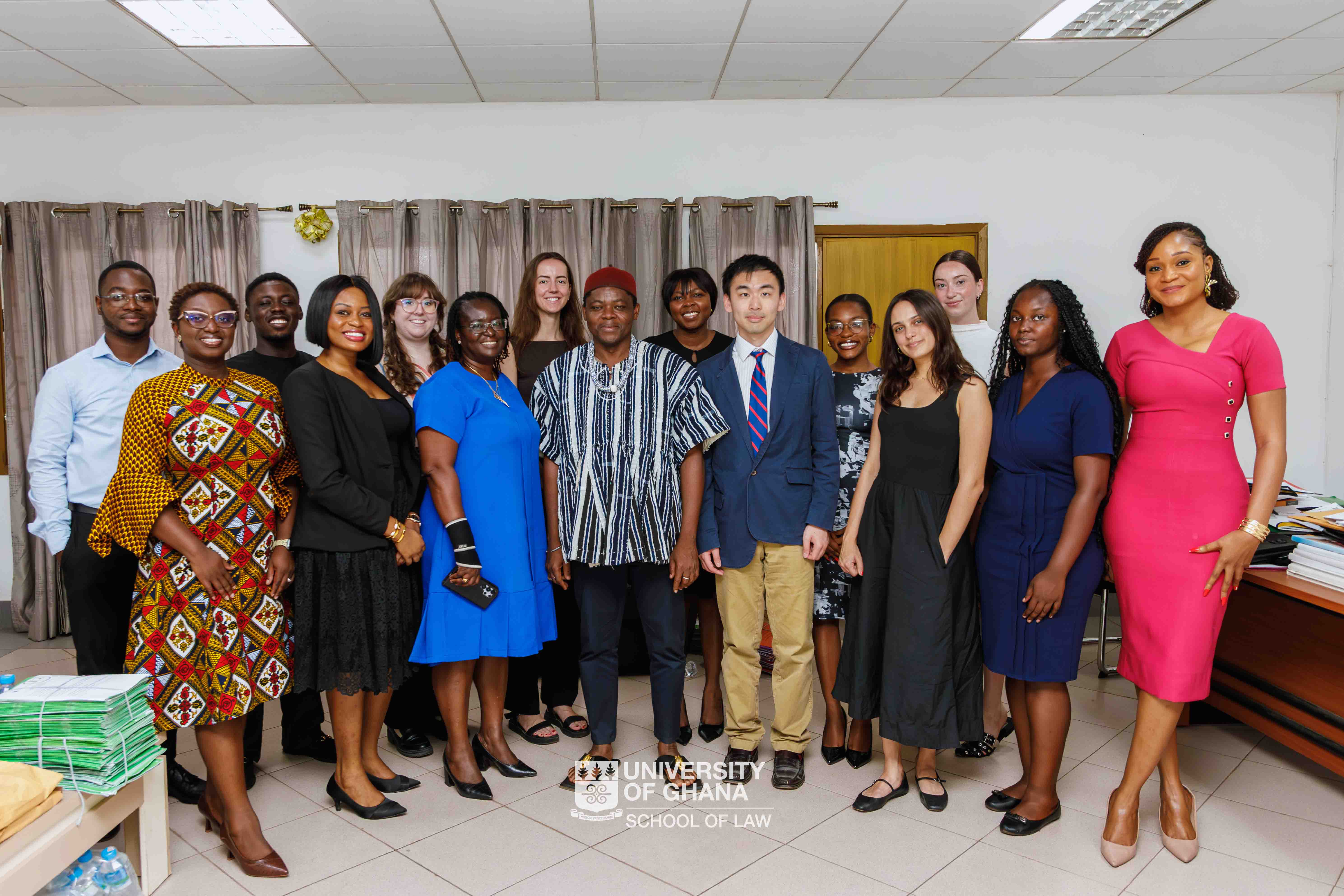
This pioneering project seeks to harness the ability of artificial intelligence to capture and analyse authentic expert and public opinions on Ghana's constitutional future. Consequently, the delegation on their present visit to Ghana are engaging stakeholders on their thoughts on how to enhance the use of artificial intelligence within Ghana’s judicial system. It was for this reason that the delegation paid a courtesy call on the Dean, during which they presented the central component of the project—the AI-driven platform Deliberation.io.
This platform has been designed to gather and refine public perspectives on complex legal and constitutional issues. Alexander Clevewood explained that the tool is based on a four-module system, which begins with the presentation of a prompt—for instance, the appointment of Supreme Court justices—followed by the collection of user opinions, which then proceeds with a critical examination of the collated views using a Socratic method, and finally, a comparative analysis is presented, allowing users to see how each perspective aligns with or differs from others.
What truly captured Prof. Atupare’s attention was the technology's capacity for objectivity. As a seasoned constitutional theorist, he shared his long-held concerns about traditional review processes. To illustrate, the Dean referred to how past findings revealed that recommendations made by the review committee on the death penalty contradicted the results of public surveys.
He expressed his hope that the project's outcome would provide a reliable foundation for advocacy and ensure that policy directions are truly aligned with the objective views of the Ghanaian people and pledged his full support for the initiative.
The meeting also highlighted that the project was a much broader collaborative effort involving multiple relevant stakeholders. Members of the UGSoL research team detailed the essential groundwork they had laid to align the AI tool with Ghana’s historical and legal framework including establishing the technical scope, stakeholder mapping, developing training materials and stakeholder demonstrations.
Speaking on behalf of the delegation was the project coordinator, Phoebe Ayitey who outlined the team's extensive itinerary, which involves further engagements with relevant stakeholders, all of whom are reportedly thrilled about the impact of this project. The purpose of these further engagements is pilot the AI platform and gather critical feedback from key national institutions and stakeholders, in order to refine the platform and ensure that it is properly calibrated for the Ghanaian socio-legal landscape.

The meeting, which brought together the joint research team, concluded on a note of shared purpose and mutual respect. The Dean expressed his gratitude to the team for their tireless efforts in bringing this project to fruition and conveyed his anticipation of reconvening with the team to receive a progress report before the delegation from the University of Pennsylvania returns to the United States.
For the University of Ghana School of Law, hosting this collaboration reaffirmed its commitment to being at the forefront of legal innovation and underscored its role in shaping a more informed and participatory constitutional future for Ghana.